
The Complete Guide to Machine Vision Lights
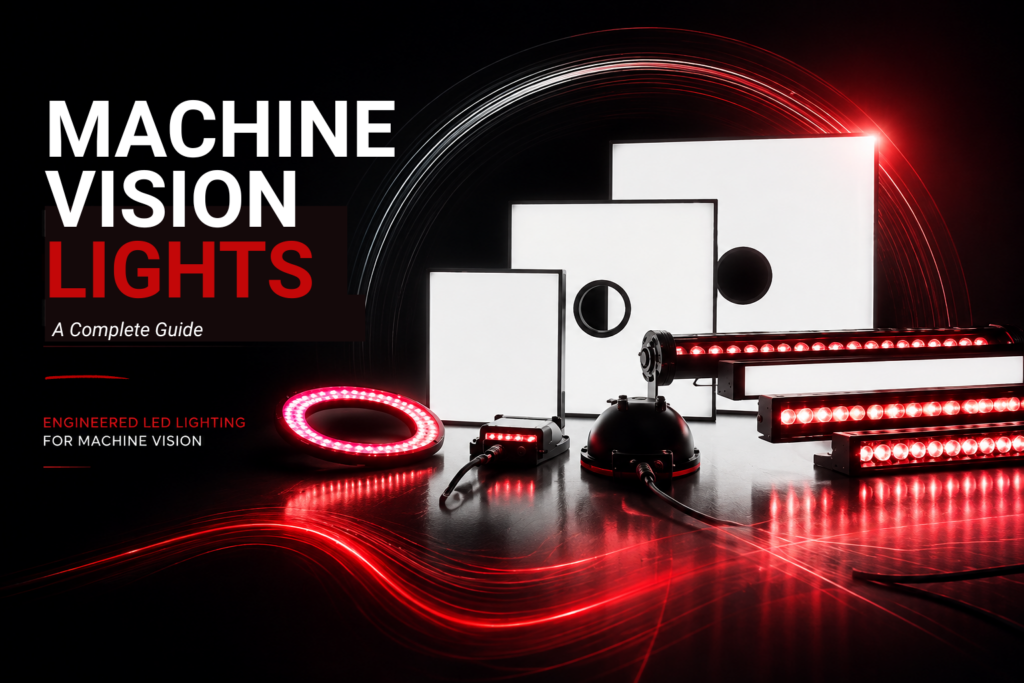
A MACHINE VISION LIGHT is the single most important component of any industrial imaging system, and often the most overlooked. In this guide, you will find all the types, techniques, wavelengths to consider when choosing the right machine vision light for your industrial application. Table of Contents How to Choose the Right Industrial LED Lighting […]
Precision Spot Light for Automated Depalletisation
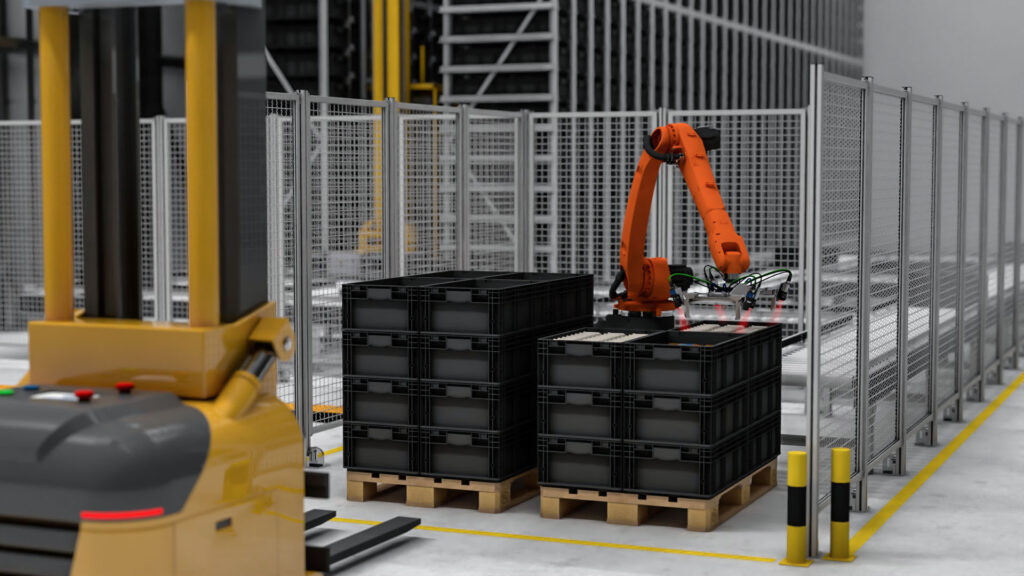
In this automated depalletisation application, a robot identifies and grips stacked crates using dedicated grip holes. A machine vision system is used to accurately detect these holes, with lighting playing a critical role in ensuring reliable and repeatable detection. Four cameras and four Z-Spot precision spot lights are positioned adjacent to one another, providing targeted […]
Modular Ethernet-Controlled Lighting on a Multi-Light Production Line
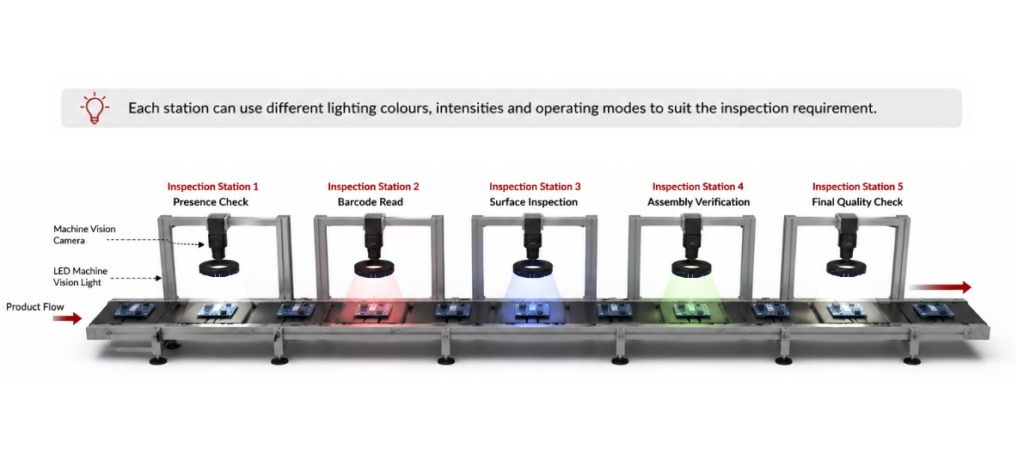
High-speed inspection environments rely on precise and adaptable illumination to maintain consistent image quality across varying product types and production conditions. As inspection systems scale across multiple stations, lighting control becomes increasingly complex, particularly where different stages require different optical configurations and tight synchronisation with imaging systems. In addition, growing system size often introduces increased […]
How to Set Up Lighting for 2D Dot-Peened Code Reading
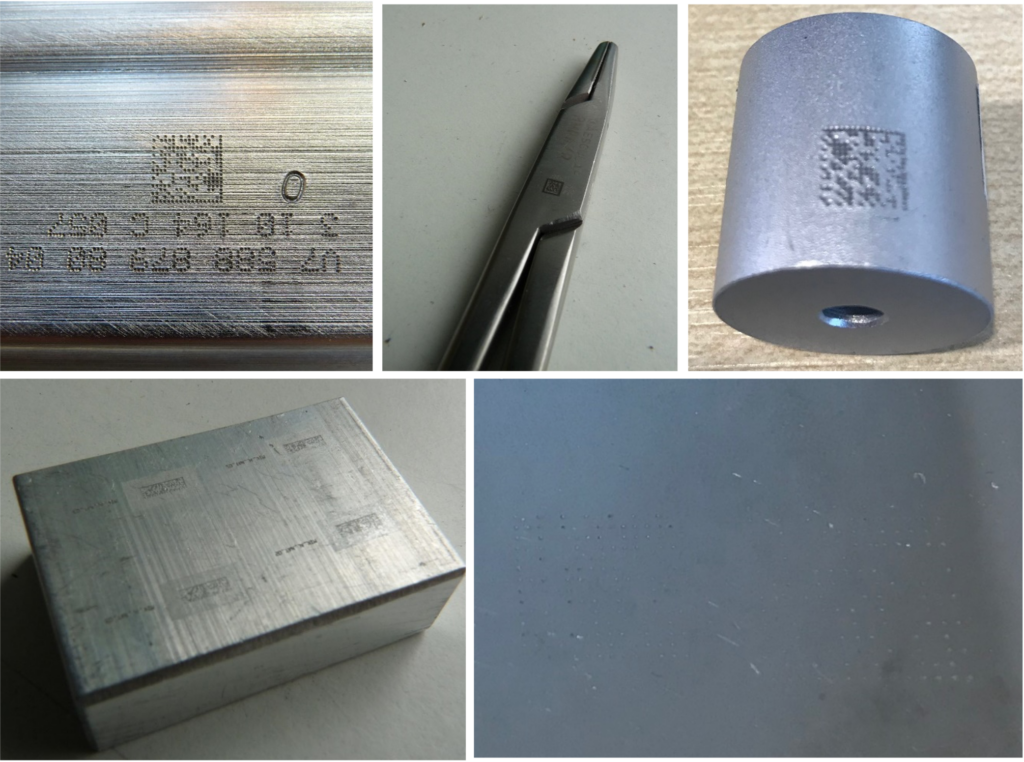
What is Dot Peen Marking? DOT PEEN MARKING is a permanent marking process in which a hardened stylus creates a series of closely spaced indentations on the surface of a component. Machines can arrange these dots in a pattern to create various codes like serial numbers, logos, and text. In many modern manufacturing environments, dot […]
High-Power Illumination for Automated Tire Inspection
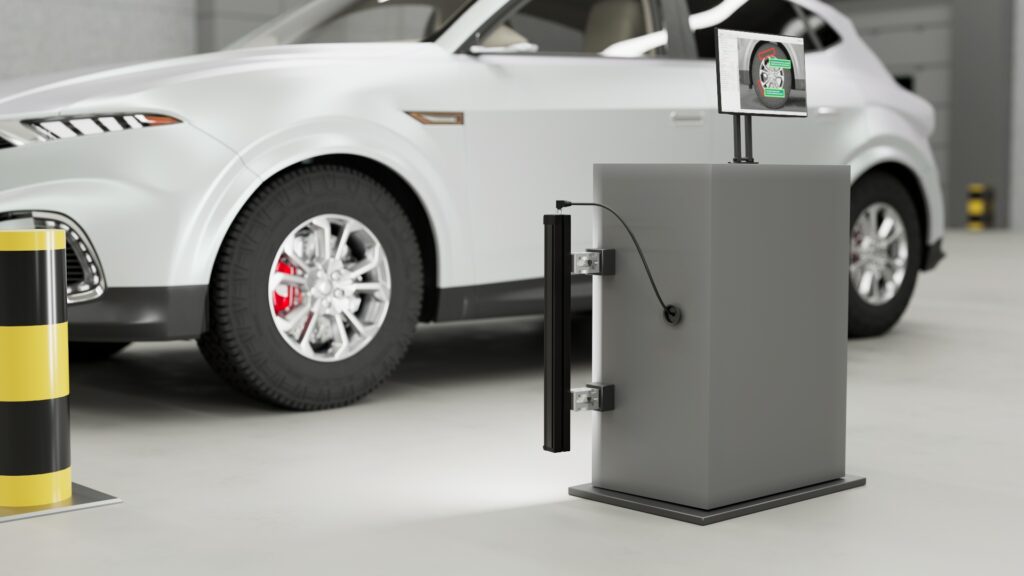
Accurate tire inspection starts with exceptional illumination. In high-throughput automotive service and manufacturing environments, TPL Vision’s High Power Strobe Bar Light (HPS) enables fast, fully automated tire analysis, without physical contact, delivering the image quality needed for reliable machine vision performance. Tire inspection presents a unique lighting challenge. The dark, matte rubber surface absorbs a […]
Lighting for Scan Tunnels in Logistics
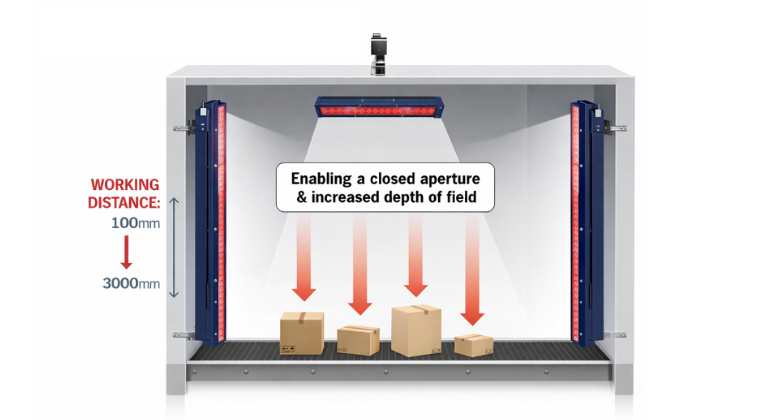
LOGISTICS is a dynamic and fast-paced sector where multiple systems operate simultaneously at high speeds to keep items moving smoothly through each stage. To maintain efficiency, these systems must be both fast and reliable, with minimal disruption. Modern logistics environments depend on consistency and flexibility, and scan tunnels have emerged as effective machine vision solutions, […]
How to Set Up Lighting for Inkjet Inspection
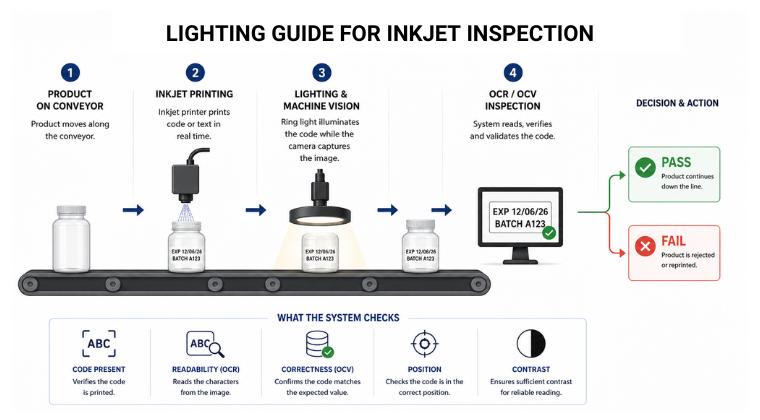
What is Inkjet Marking? Inkjet marking is a non-contact industrial printing technology that sprays drops of ink to create high-quality text, codes, barcodes and logos. These fully automated solutions can easily be applied to almost any product with surfaces like plastics, metals, and glass even if their shape is regular or irregular. This is highly […]
Which Machine Vision Light is Suitable for Large Fields of View

What is a large Field of View (FoV)? A large area does not have an exact definition, a large FoV for TPL Vision would be a FoV width >500mm and a working distance (WD) >500mm. However, to others this definition may vary and the illumination principles which are outlined in this application study can also […]
GS1 – Transitioning from 1D to 2D Barcodes
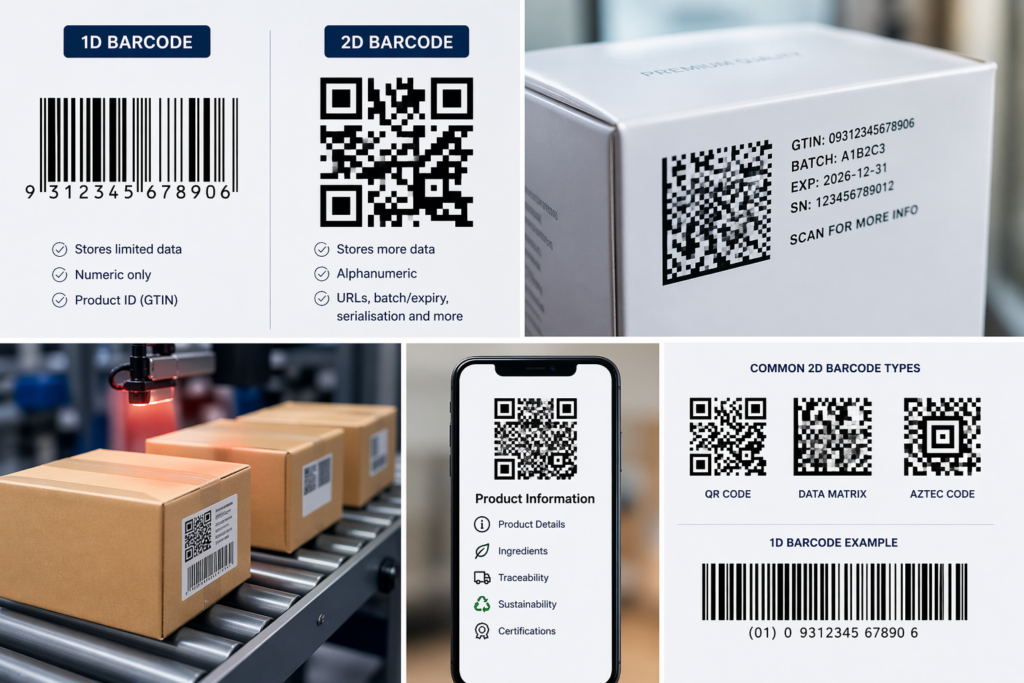
What is GS1 Sunrise 2027? GS1 Sunrise is a global effort that aims to change how products are identified and tracked across retail and supply chains. The main goal is for the widespread adoption of 2D barcodes, which will gradually replace traditional 1D barcodes as the main format for storing detailed product data. This transition […]
How to Illuminate Mirrored and Shiny Surfaces with Machine Vision Lighting
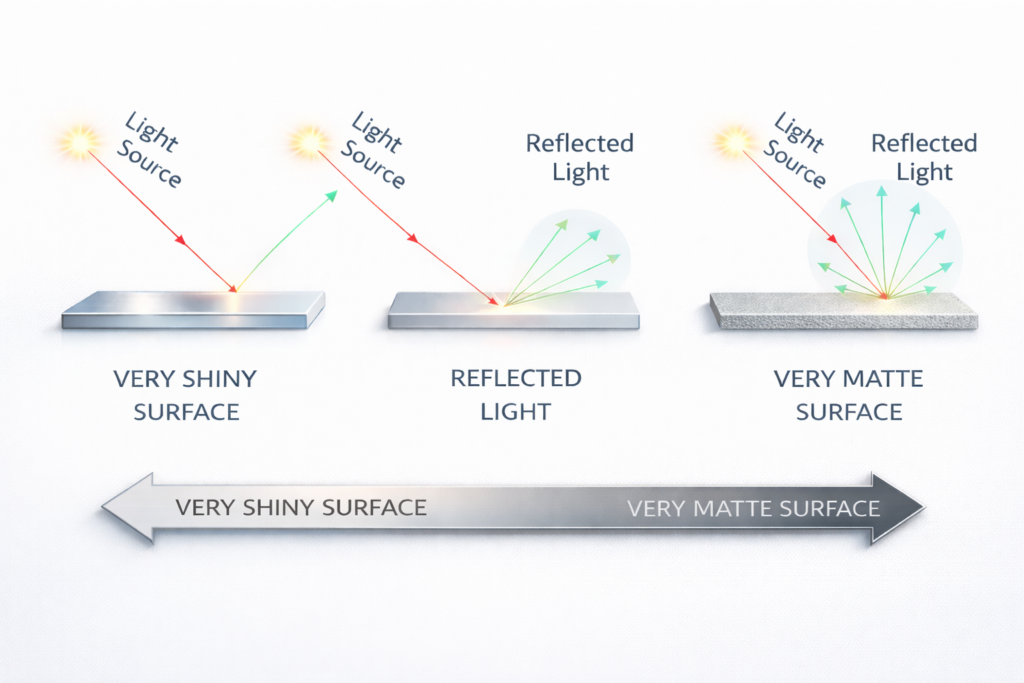
Inspecting shiny and reflective surfaces in machine vision is challenging due to glare and uncontrolled reflections. When setting up an application to inspect shiny surfaces, features or components, you must be very careful with the type of lights you use and the position of your lighting relative to your camera. 3 Machine Vision Lighting Setups […]
Automated Dock Door Vision Systems for Logistics and Pallet Tracking
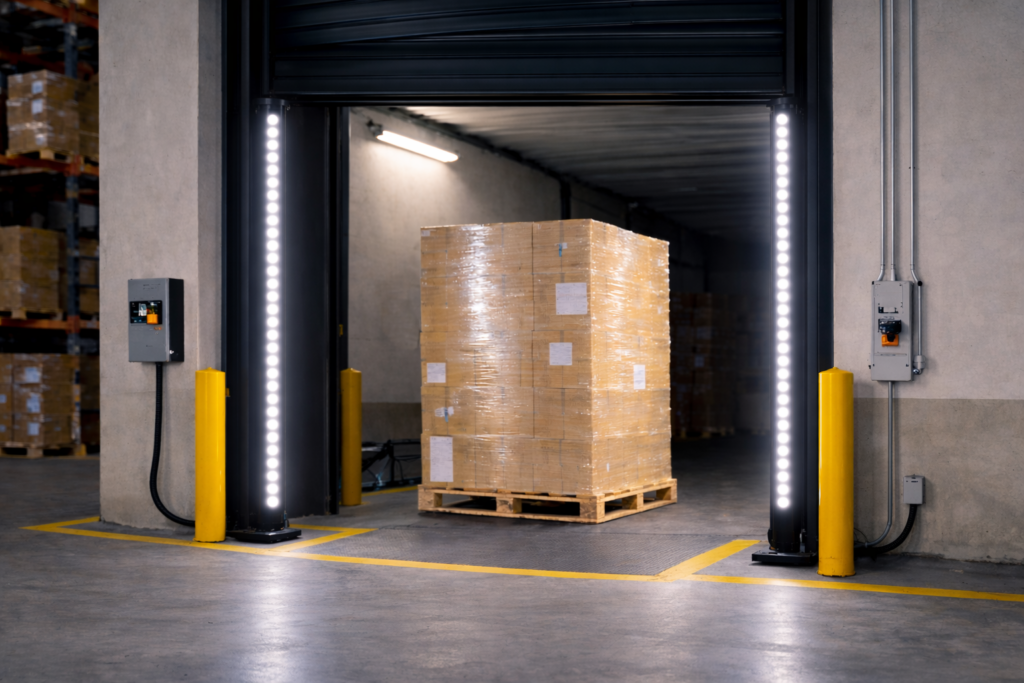
DOCK DOOR INSPECTION is transforming the logistics and warehouse automation industry, helping high-throughput distribution centres handle packages efficiently and with minimal errors. What is a Dock Door Inspection Vision System? An automated dock door vision system is a solution that combines a camera, lights, and AI-powered software. Installed at a loading dock door, the vision […]
Scan Tunnels vs Stationary Vision Systems in Manufacturing

What is the difference between a Scan Tunnel and Stationary Vision System? Scan tunnels are designed for high-speed inspection of moving items, while stationary vision systems inspect objects in fixed positions for greater precision. Choosing the right setup depends on conveyor speed, inspection detail, barcode readability, and lighting requirements. The modern manufacturing sector is diverse […]
A Complete Guide to Short Wave Infrared (SWIR) for Machine Vision
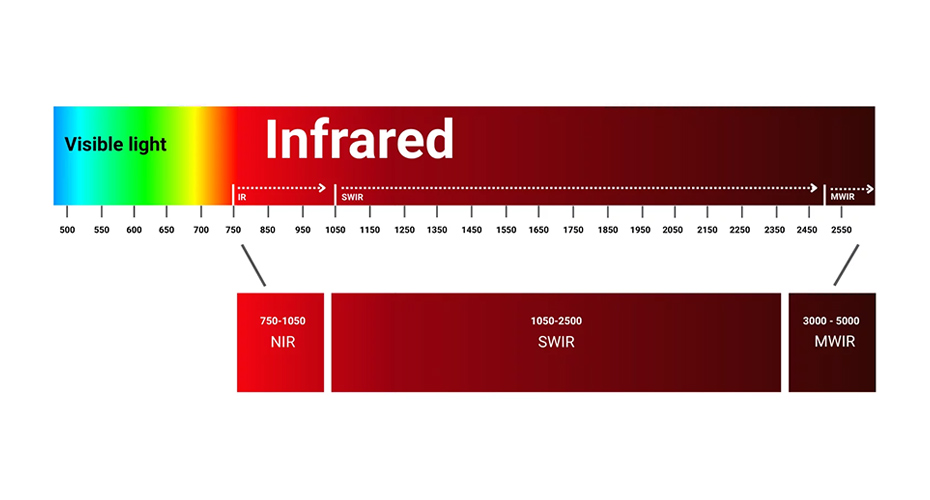
What is SWIR? Short Wave Infrared (SWIR) is a segment of the electromagnetic spectrum, located between visible light and long-wave infrared; SWIR typically lies between 1050nm to 2500nm. These wavelengths are invisible to the human eye but can be extremely useful to advanced imaging. To optimally capture SWIR radiation, specialised SWIR cameras are designed with […]
Machine Vision Applications in Logistics: Scan Tunnels

In the logistics sector, production and sorting systems operate at high speed, often for 24 hours a day, to process thousands of packages. To maintain efficiency and accuracy, automated systems are used for keeping pace with continuous movement while reducing the risk of error. A key part of this automation is machine vision, enabling precise […]
EV Battery Inspection with Advanced Machine Vision Lighting

With the rapid acceleration of the Electric Vehicle (EV) industry, the production of lithium-ion batteries (LIBs) is growing rapidly. Maintaining high quality is critical for safety, performance, and reliability. Machine vision inspection plays a key role at every stage of battery production, from cell component manufacturing to final assembly of the battery system. Effective illumination […]