
How intelligent external control transformed a high-speed conveyor inspection.
Why Standard Machine Vision Lighting Struggles on High-speed Conveyors
Reliable image quality in machine vision depends on far more than choosing the right light source. Different products, materials, surface finishes, and camera settings each demand different lighting conditions to produce a usable image. Traditionally, meeting those demands has meant investing in custom lighting hardware for every task, or accepting compromised performance.
This was the exact problem on a high-speed conveyor line inspecting parts with reflective metal and glass surfaces. The line ran fast enough to introduce motion blur, the surfaces were prone to unwanted reflections, and the products being inspected changed throughout the day, each requiring its own lighting behaviour. Buying dedicated lighting for every scenario was neither practical nor cost-effective.
Why Standard Machine Vision Lighting Struggles on High-speed Conveyors
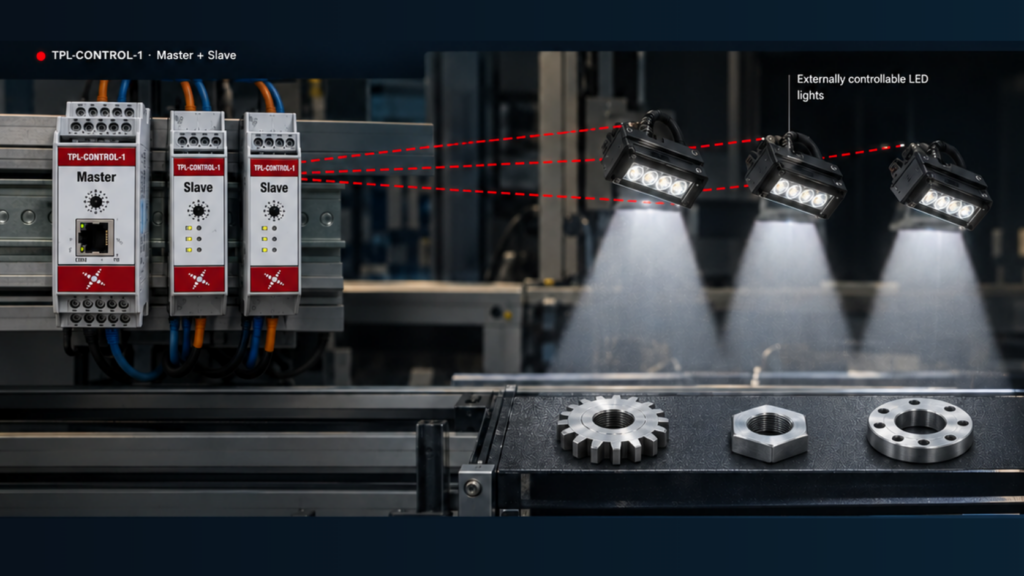
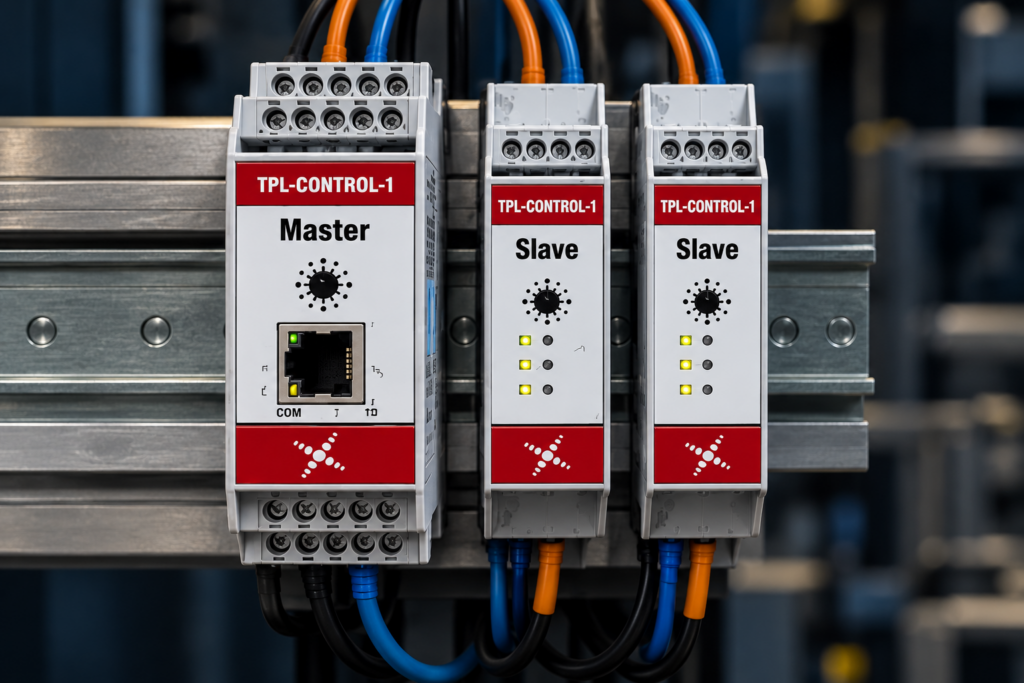
TPL Vision’s TPL_CONTROL_1 was integrated with the existing externally controllable LED illumination, enabling precise, application-specific control tailored to the application’s requirements.
To freeze the fast-moving parts and sharpen contrast on the reflective surfaces, the controller synchronised the lights to the camera’s trigger and switched them into OverDrive mode, producing a very short, high-intensity burst of light at exactly the right moment. The result was crisp, blur-free images with strong contrast, even on challenging metal and glass.
Just as importantly, the setup adapted on the fly. As the conveyor slowed for different parts, the controller automatically shifted to lower intensity and longer pulses to suit the new conditions.
The same light stayed in the same position throughout, no repositioning, no hardware changes, no downtime. In practice, the operator could fine-tune four key parameters for any task:
- Light intensity
- Pulse timing and duration
- Trigger synchronisation
- Illumination behaviour to match each product and inspection condition
That flexibility let a single lighting solution perform effectively across multiple applications, a highly reflective metal component and a textured plastic part could be handled by the same light, simply retuned.
Sharper Images and More Reliable Defect Detection
By fine-tuning illumination for each part, the customer achieved more consistent image contrast, fewer unwanted reflections, and clearer visibility of critical features. More consistent images made the inspection algorithms more reliable and improved defect detection across reflective, textured, and low-contrast surfaces alike.
Because the solution enhanced existing lighting rather than replacing it, the customer also reduced system complexity, shortened development time, and avoided the cost of application-specific hardware. As production requirements evolved, the controller adapted with them, making it well suited to a dynamic automation environment where speed, performance, and reliability are essential.
Adaptive Lighting Control for Dynamic Automation Environments
Combining standard machine vision lighting with intelligent external control gives manufacturers the flexibility to optimise illumination for virtually any inspection task, without custom hardware, and without moving a single light.