
Reliable MACHINE VISION starts with understanding the application and getting the lighting right.
In this Q&A, our Vice President of Sales Tony Carpenter shares his approach to solving inspection challenges, from listening to customers and testing real parts to making sure a solution works consistently on the production line. He also reflects on new opportunities in the industry and the technologies that could shape its future.

What has working in machine vision taught you about solving problems and building relationships?
Tony: Every application is different, so you have to start by listening to the customer and testing your ideas thoroughly. I’ve also learned how valuable the people in this industry are. I’ve met some great people over the years, including competitors I can talk openly with about the business. That openness makes machine vision a rewarding field to work in.
How has the wider adoption of machine vision changed the needs of your customers?
Tony: We now work with a much broader range of customers and applications. Some are tackling complex new inspection challenges, while others are using machine vision for the first time, perhaps for a straightforward code reading task. Better software, more powerful hardware and easier integration have made the technology accessible to more companies. For us as a component manufacturer, the challenge is supporting both ends of that range. Even a seemingly simple application benefits from discussing the requirements and testing the solution properly.
What new opportunities are emerging for machine vision?
Tony: It’s a fast-changing area, and adoption seems to be moving more quickly than it has in the past. Automotive has had its ups and downs in recent years, while battery inspection, logistics and recycling are attracting more attention.
I expect some of the strongest growth to come from industries exploring automation or process improvements for the first time. We’re also seeing growing interest in food and beverage, pharmaceuticals and medical devices, alongside electronics, where machine vision has been used for many years.
What challenges can the right lighitng solve in a vision application?
Tony: Customers often come to us with difficult inspections, poor image quality or codes that cannot be read consistently. Reflective surfaces and low contrast are common causes.
The timing of the conversation matters too. When we’re involved at the start of an application, it’s much easier to specify lighting that suits the inspection, whether the task is simple or complex. We’re often brought in after the camera and other components have been chosen, which can limit the options. Lighting should be one of the first decisions when designing a vision system.
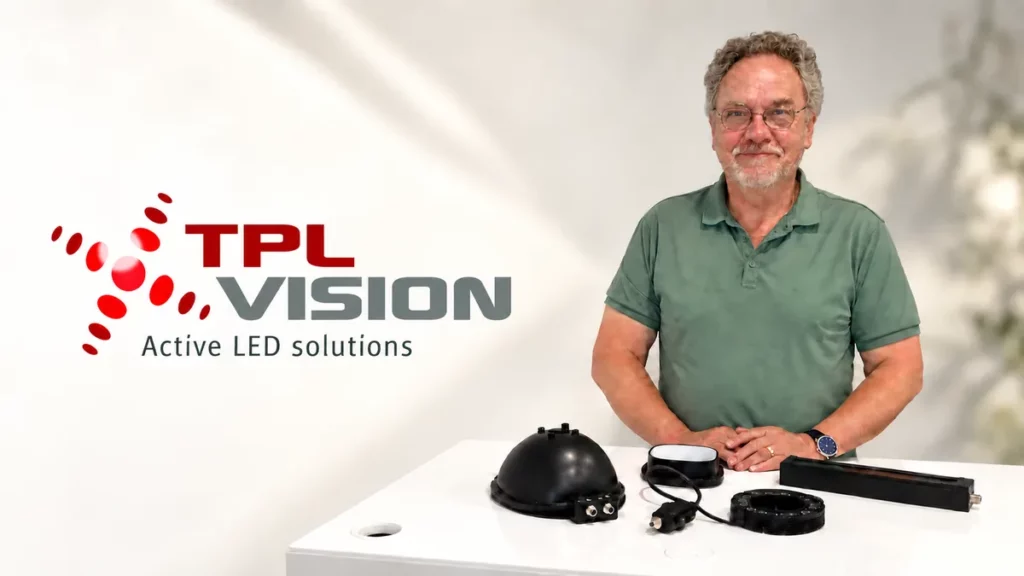
When a customer brings you a new challenge, what do you want to see first?
Tony: I want to see the actual parts, including examples that should pass and examples that should fail. A description of the application is useful, but the parts often reveal details that are difficult to explain on paper: a slight change in surface finish, a reflective label, or a defect that only appears at a particular angle.
I also want to understand where the inspection will take place. The same part can produce a very different image on a production line than it does on a desk.
What makes a lighting test useful?
Tony: A useful test answers a specific question. We might be trying to make a scratch visible, improve contrast between two materials, or read a code through reflective packaging. Once we know what success looks like, we can compare lighting options against that goal.
It is tempting to choose the image that looks best to the eye. What matters more is whether the feature the vision system needs to inspect appears clearly and consistently.
Why might you test different colours of light on the same part?
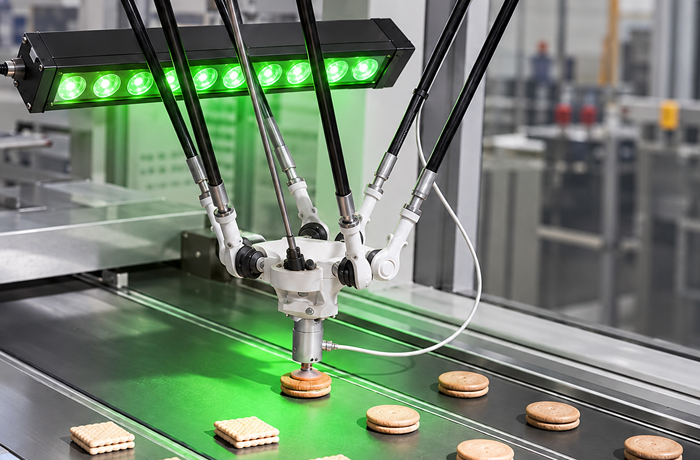
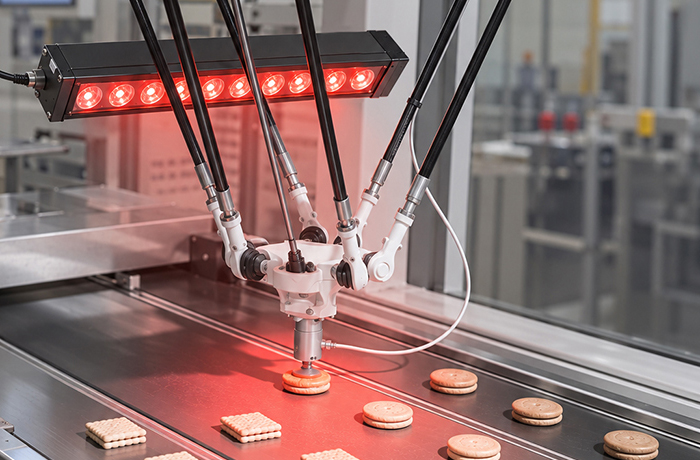
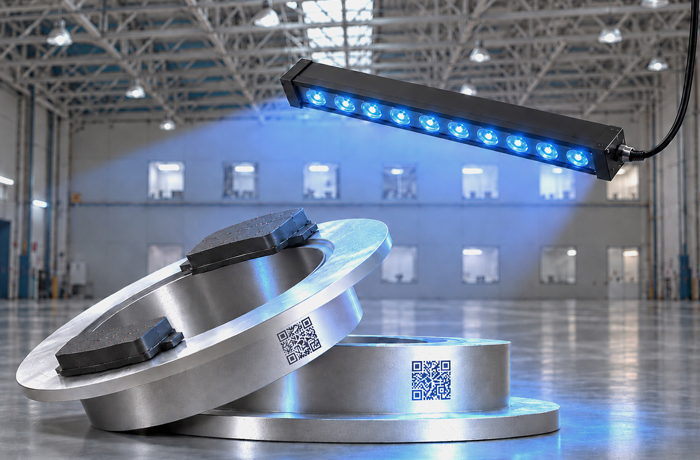
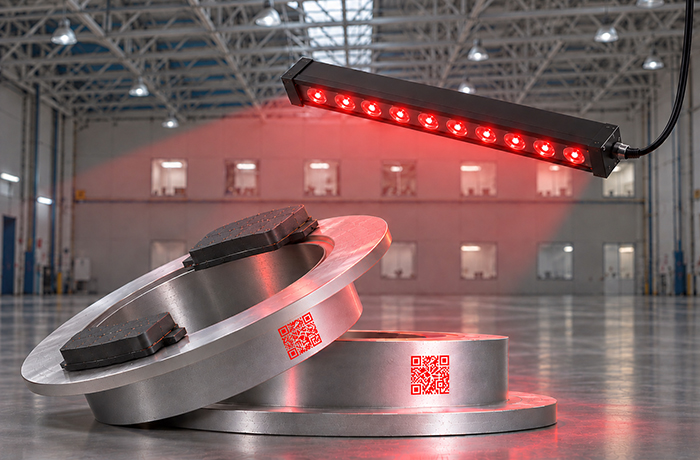
Tony: Materials respond differently to different colours. Changing the light can make one feature stand out while reducing the appearance of something that distracts from the inspection.
That is why testing several colours can be valuable early in a project. You may find that a small lighting change gives you a clearer image without having to make the rest of the system more complicated.
How do you decide whether a lighting setup is ready to move beyond the test bench?
Tony: I would want to see it produce a clear result across a representative range of samples, not just one excellent image. That includes parts near the acceptable limit, as well as the obvious good and bad examples. The setup also has to be practical to install and maintain. A solution that depends on positioning everything perfectly each time may be difficult to rely on in production.
Can a lighting solution work in a test and still struggle on the production line?
Tony: Yes. During a test, you can take your time and position a part precisely. On a line, parts move, their position can vary, and there may be other light in the surrounding area. That is why we need to test more than one ideal sample. We should look at the range of parts and conditions the system will encounter during normal operation.
What keeps you motivated in your work?
Tony: I get to work with people who share my enthusiasm for a market and technology that are always evolving. New challenges keep the work interesting, but the most satisfying moment is helping a customer solve a problem they thought was impossible and seeing the solution work for the first time.
What is one question customers could ask often during a project?
Tony: I would ask, “What happens when conditions change?” A part may arrive at a slightly different angle, its surface may vary between batches, or the inspection area may be affected by surrounding light.
Thinking about those variations during development helps us build a solution that works consistently, rather than one that only works during a demonstration.
What should someone new to machine vision focus on first?
Tony: Stay curious and keep learning. The technology changes quickly, and every application brings a different challenge, so hands-on experience matters as much as technical knowledge.
Build a strong understanding of the fundamentals, test ideas for yourself and learn from people with experience. The best solution usually starts with understanding the application, rather than reaching straight for the latest technology.
Over the next ten years, which technology do you think will most change how we approach machine vision and where might the biggest breakthroughs come from?
Tony: I think AI will have the biggest impact, particularly as it becomes more capable of interpreting complex images and adapting to new tasks. Technologies such as hyperspectral imaging, 3D vision and edge computing will give us richer data and faster ways to act on it. In the longer term, though, the most exciting breakthroughs may come from approaches we haven’t imagined yet, solutions that move beyond the hardware and assumptions we rely on today.