
The modern manufacturing sector is diverse and complex, relying on numerous systems and processes to ensure seamless large-scale operations. Machine vision technology is widely adopted across the industry due to its versatility and adaptable applications. Two commonly used solutions, scan tunnels and stationary vision systems, are suited to different tasks: scan tunnels excel in high-speed processing, while stationary systems are ideal for detailed inspection.
What is a Scan Tunnel?
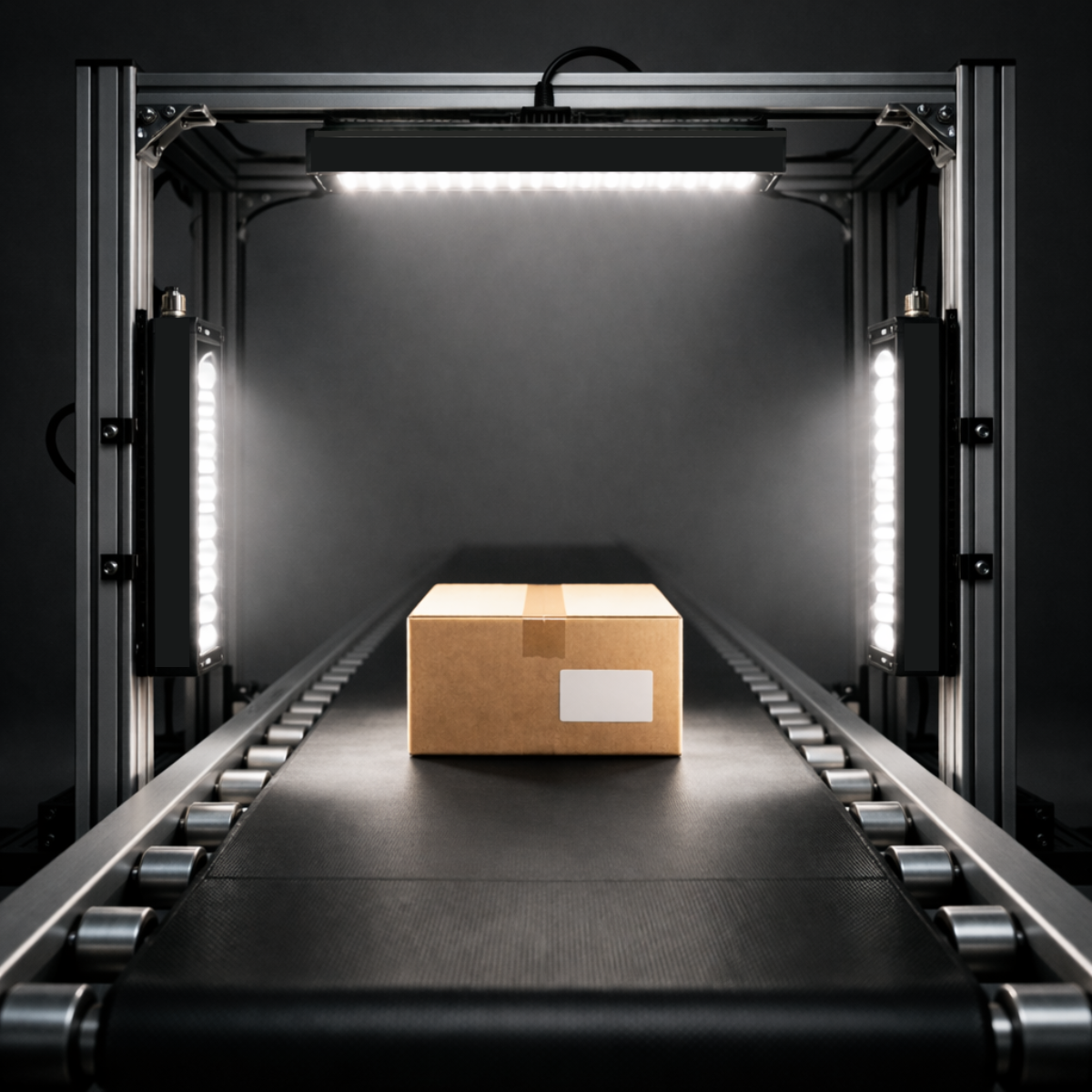
Scan tunnels are systems that are made up of machine vision cameras, lights, and sensors to create a tunnel-like structure for inspecting moving objects as they pass through on a conveyor system. The elements of a scan tunnel are positioned to cover all sides of packages (top, bottom, front, back, and sides), with high-intensity lighting ensuring clear image capture at speed so the system can identify, track and sort items in a fully automated process.
Most commonly used in logistics and material handling environments (like warehouses, distribution centres, and manufacturing facilities), scan tunnels are useful for scanning, dimensioning, inspection and quality control.
What is a Stationary Machine Vision System?
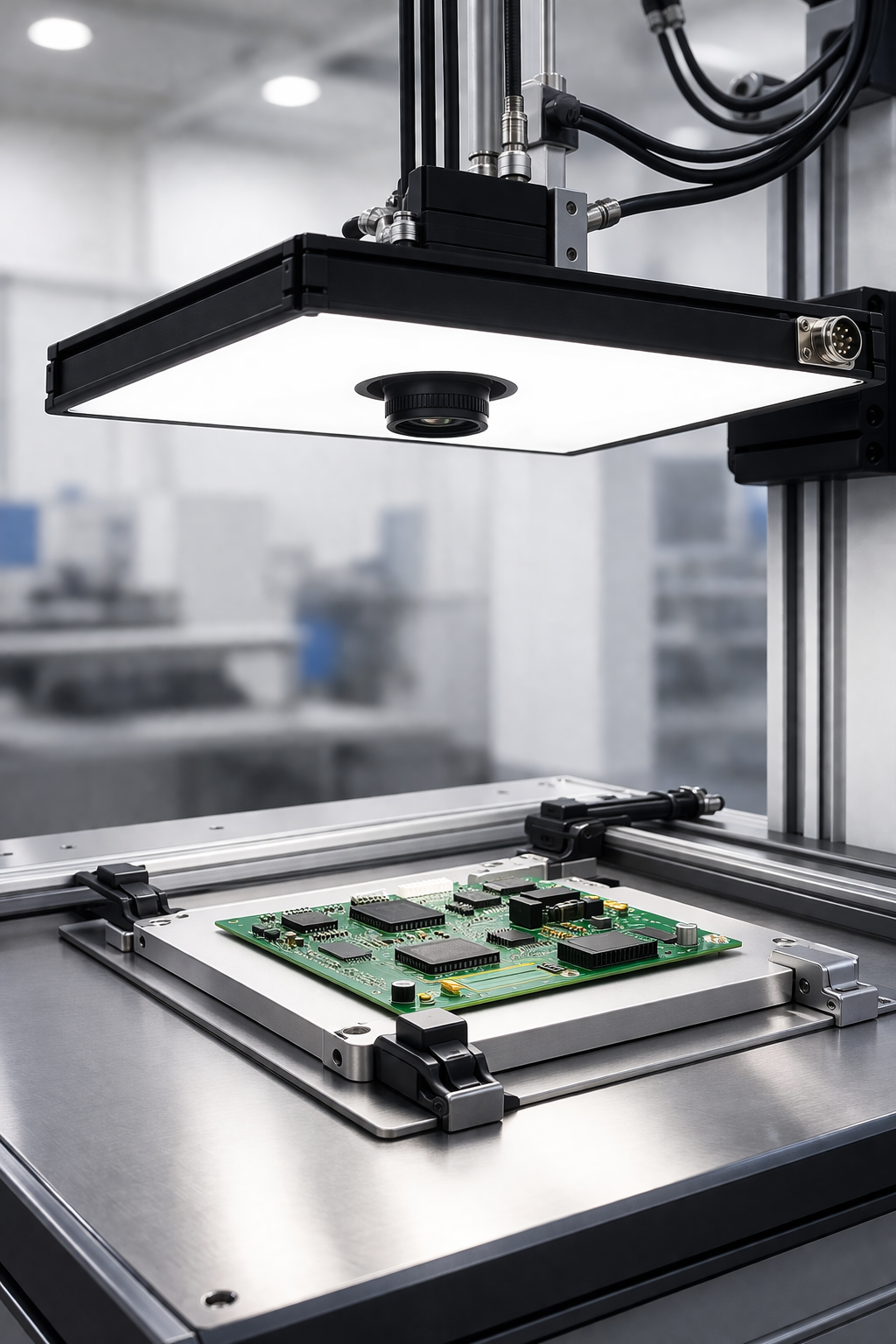
Unlike scan tunnels, stationary vision systems are fixed automated imaging setups that usually scan items when they have stopped or paused on the conveyor system. Controlled lighting is used to provide consistent illumination, helping systems to capture highly detailed images with consistent, repeatable results.
Stationary systems are commonly used in applications like assembly verification, robot guidance and dimensional measurement.
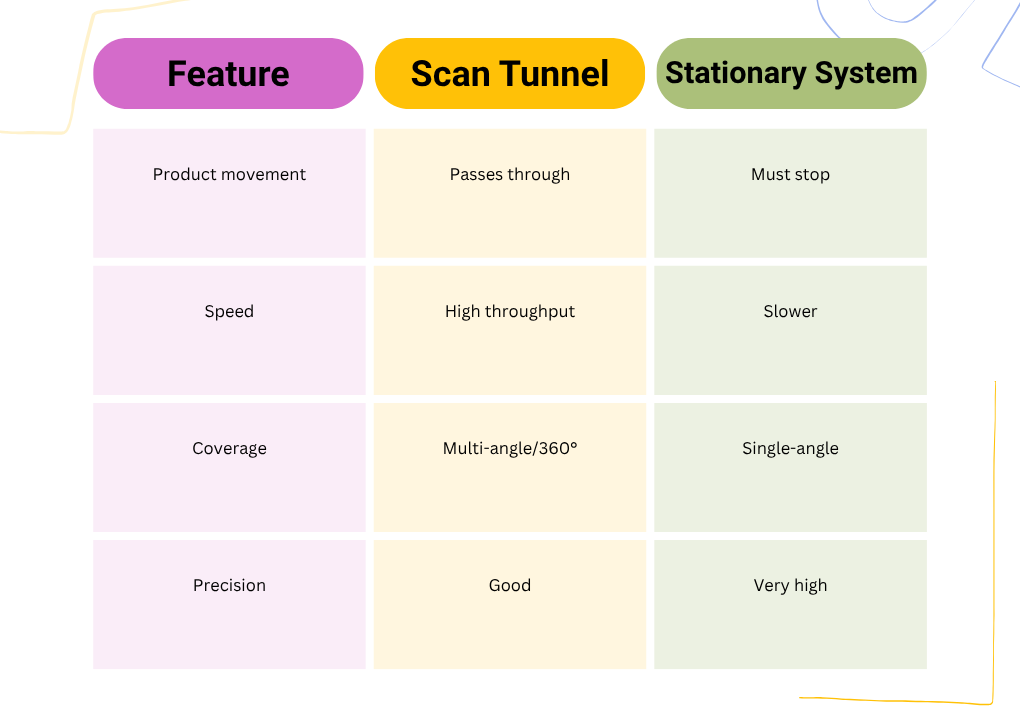
Key Differences between Scan Tunnels & Stationary Systems
Advantages - Scan Tunnels
High-Speed Processing
Scan tunnels are designed for applications where multiple conveyors operate at high speeds in a dynamic environment. They capture data and identify objects whilst they are moving along the conveyor, making them ideal for large-scale logistics operations.
Full Surface Inspection in Motion
Using multiple cameras and high-intensity lighting setups, scan tunnels capture information from different angles as items pass through, improving read rates for barcodes, labels, and dimensioning.
Advantages - Stationary Systems
Greater Precision and Control
Since items are inspected while they have stopped or temporarily paused, stationary systems can capture higher quality images for detailed inspections, measurements, or quality checks, supported by stable and uniform lighting conditions.
Flexibility for Complex Tasks
Stationary systems are regularly used in applications which require specific positioning, multiple inspection criteria, or integration into smaller workstations. They are perfect for handling diverse parts, customised inspection requirements, or specialised workflows.
Lighting Solutions for Scan Tunnels vs Stationary Vision Systems
Lighting plays a critical role in both scan tunnel and stationary machine vision systems, directly affecting image clarity, inspection accuracy, and overall system performance. The right lighting ensures consistent results, whether objects are moving at high speed or positioned for detailed inspection.
Scan tunnels require flexible, high-power lighting that can keep up with conveyor speeds and short camera exposure times. Our new HPS Bar Light is designed for ultra-high-speed imaging, delivering up to 2.5M lux (WHI) at a 200mm working distance, with an ultra-fast 800ns rise time for precise synchronisation with cameras and motion.
In stationary systems, lighting focuses on stability and uniformity to support accurate image capture. Area lighting is commonly used for its even coverage, and the HPFDOME light provides consistent, high-brightness illumination across large fields of view, making it ideal for precise and repeatable inspections.
The Modular Ringlight is another versatile option for stationary setups. Equipped with three interchangeable accessories, it enables a range of lighting techniques (including low angle, dome, and dark field lighting). This supports diverse applications such as inspecting shiny or reflective surfaces, detecting defects, and edge detection.
Scan Tunnel Applications
Parcel and Logistics Sorting
In courier hubs and e-commerce fulfilment centres, scan tunnels are used to scan barcodes, read labels, and capture dimensions/weights of packages as they move along high-speed production lines.
High-Volume Distribution Centres
Scan tunnels are commonly used in warehouses and logistics environments where thousands of items are identified and tracked continuously for stock control and shipping verification.
Stationary System Applications
Quality Inspections
Stationary systems are used on production lines where items can stop briefly or be positioned in a specific way. The system can carry out checks for product defects, verify assembly, measure components, and confirm label placement.
Pick-and-Place or Robotic Guidance
Static machine vision systems can be integrated at workstations where cameras and powerful lighting help robots to locate and handle objects with high accuracy in fixed positions.
Scan Tunnels or Stationary Systems: Which to Choose?
Scan tunnels and stationary machine vision systems are both highly versatile solutions that can be adapted to a wide range of applications. Scan tunnels excel in high-speed environments, where rapid identification, tracking, and sorting of items under intense illumination are critical. In contrast, stationary systems are ideal for situations where capturing extremely high-quality images of static objects is essential, providing highly reliable and precise inspection. Ultimately, the choice between the two depends on the specific requirements of the application, including factors such as speed, image resolution, and the nature of the objects being inspected.
Related products
-
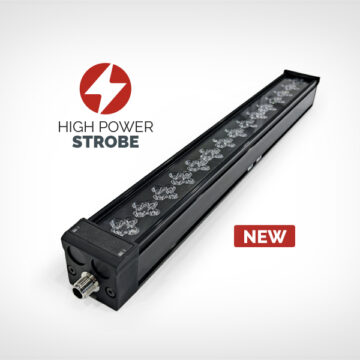
High Power Strobe HPS BAR
- Ultra Bright Strobe Barlight
- Angle Changers Flexibility
- Sizes up to 2500mm
-
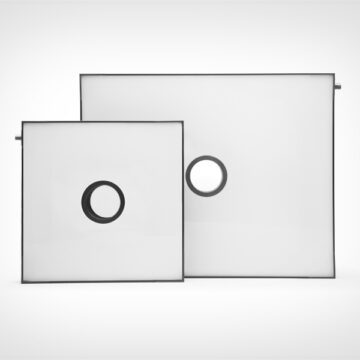
High Power HPFDOME
- Powerful, easy to use flat dome
- Tiny 4mm borders
- Sizes from 0.04m² to 0.81m²
-
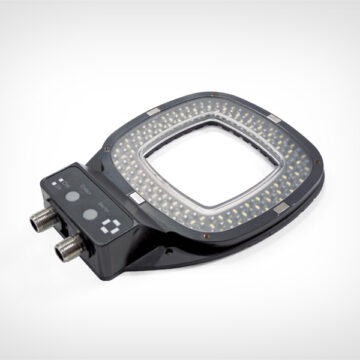
Modular Ringlight
- Powerful, modular ring light
- OverDrive, sectors, bicolour
- Dome + Low Angle accessories