What is GS1 Sunrise 2027?
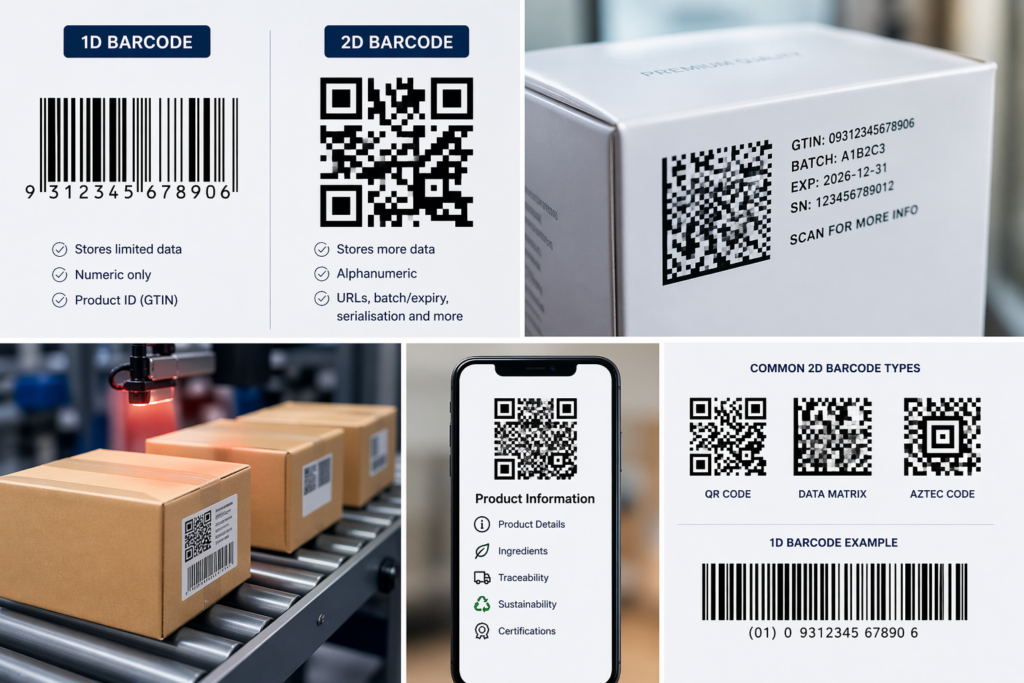
GS1 Sunrise is a global effort that aims to change how products are identified and tracked across retail and supply chains. The main goal is for the widespread adoption of 2D barcodes, which will gradually replace traditional 1D barcodes as the main format for storing detailed product data. This transition aims to enhance supply chain visibility and provide consumers with more accessible and reliable product information. By 2027, the intention is for most retail and related sectors to have moved toward using 2D codes such as QR codes and Data Matrix codes on all product packaging. This transition will affect retail, healthcare, food, logistics, and manufacturing, where high-volume scanning and traceability are critical.

Why is GS1 Happening?
GS1 Sunrise is being introduced because traditional barcodes can no longer meet the demands of modern supply chains and consumers. Traditional 1D barcodes, such as EAN and UPC, are limited to storing only the product ID (GTIN) which is no longer enough for today’s requirements around traceability, transparency, and regulatory compliance.
As a result, the industry is shifting toward 2D barcodes, which can store significantly more data and even connect to digital information sources. This enables the inclusion of key details such as expiry dates, serialisation, batch numbers, sustainability information, and full traceability data. By supporting richer data capture, 2D codes improve inventory management, enable faster and more accurate recalls, strengthen product authentication, and give both businesses and consumers immediate access to more detailed product information.
To support this shift, GS1 Digital Link provides a standardised way of connecting physical barcodes to digital information. GS1 Digital Link is the technology that effectively turns a barcode into a web-enabled identifier, allowing both machines and consumers to access dynamic product data such as specifications, traceability records, and compliance information from a single scan.
Key Benefits of GS1 Sunrise
Richer product data in a single scan
2D barcodes can store far more information than traditional 1D codes, including batch numbers, expiry dates, and serialisation data. This enables improved traceability, stronger compliance, and faster, more accurate product recalls.
Improved efficiency and flexibility
A single 2D code can support multiple use cases, including point-of-sale scanning, warehouse tracking, and logistics operations. This reduces the need for multiple labels and streamlines processes across the supply chain.
Enhanced traceability and transparency
With more complete and accessible product data, businesses gain better visibility across the entire product lifecycle, while consumers and partners can access more reliable product information when needed.
What Happens to 1D Barcodes after 2027?
After the GS1 Sunrise deadline in 2027, 1D barcodes will not disappear, but will take a secondary role as the use of 2D barcodes becomes more widespread. They will continue to be supported for basic product identification at checkout and in legacy systems but will no longer be sufficient on their own for many retail and supply chain processes. During the transition period, organisations will adopt dual marking until systems and equipment are fully upgraded to support 2D barcodes. Ultimately, businesses will rely primarily on 2D barcodes for end-to-end traceability and digital integration.

Machine Vision's Role in the GS1 2D Barcode Transition
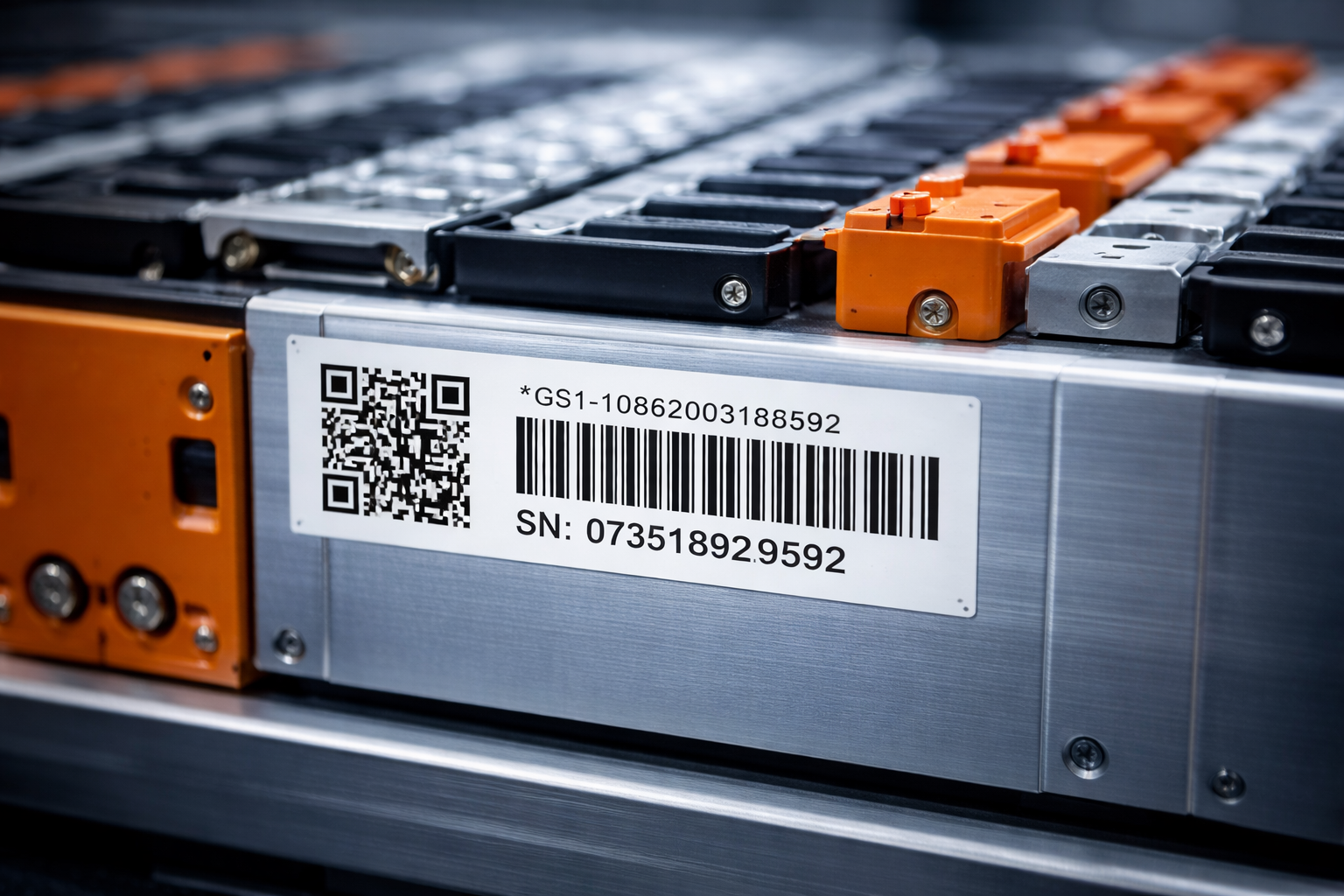
As the adoption of 2D barcodes increases, machine vision systems will play an increasingly important role in ensuring reliable inspection and decoding across a wide range of products, materials, and operating environments. The greater complexity of these codes introduces new imaging challenges that require precise, controlled inspection conditions.
Challenge
Difficulty
Solution
 SMALLER, DENSER CODESÂ
are HARDER to READ
2D barcodes will be more sensitive to image quality, focus, and contrast. Poor visibility can reduce decoding accuracyÂ
High-resolution cameras and controlled illumination will capture high-quality images, for reliable decoding of data-dense codes
CODES APPEAR on MIXEDÂ
or DIFFICULT SURFACES
Codes may be printed on plastic, film, curved packaging, glossy labels, or reflective materials, causing glare, distortion, and uneven readability
Uniform illumination and controlled beam angles reduces reflections and improves contrast for better visibility of varying surface types
HIGH-SPEED CONVEYORS REQUIREÂ
PRECISE IMAGE CAPTURE
Products moving quickly through logistics and production environments makes barcode capture more difficult
Synchronising cameras and strobed lighting will freeze motion and capture sharp barcode images at high conveyor speeds
ENVIRONMENTAL VARIATIONÂ
AFFECTS READABILITY
Changes in ambient light, dust, vibration, packaging orientation, or inconsistent positioning impacts barcode detection and decoding reliability
Machine vision provides stable, repeatable imaging conditions using dedicated lighting and automated inspection control
WHERE WILL TPL VISION'S LIGHTING COME IN?
As GS1 Sunrise drives the adoption of 2D barcodes, inspection and identification systems will face increased performance demands. These codes are more data-dense and are being applied across a wider range of packaging types and surface materials, making consistent readability more challenging in real-world production environments.
In this context, machine vision lighting becomes a critical enabler of reliable decoding. High-performance, controlled illumination ensures that barcode images remain stable and high-contrast, even under fast-moving or visually complex conditions. This is particularly important in automated inspection systems where speed, consistency, and accuracy are essential.
TPL Vision lighting solutions are designed to address these challenges by delivering application-specific illumination for industrial imaging environments. In GS1 2D barcode applications, this supports:
- Consistent readability across varied packaging materials
- Reliable decoding on reflective, curved, or complex surfaces
- Synchronisation with high-speed conveyor and inspection systems
- Reduced read failures and improved process uptime
By ensuring stable and optimised illumination at the point of capture, TPL Vision enables machine vision systems to meet the reliability and performance requirements of large-scale 2D barcode deployment.
Related products
-

High Power Strobe HPS BAR
- Ultra Bright Strobe Barlight
- Angle Changers Flexibility
- Sizes up to 2500mm
-

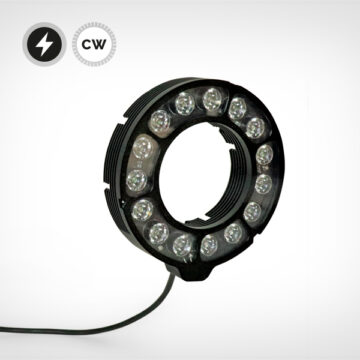
Modular M-HPRING
- Versatile 76 mm ring light
- CW and Strobe OverDrive
- Angle Changer compatible
-

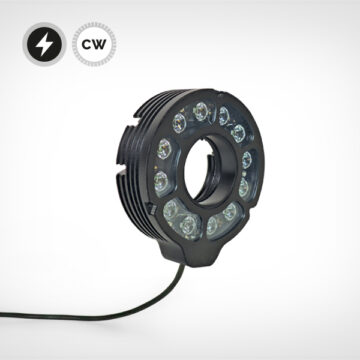
Modular M-TRING
- Powerful 37 mm ring light
- Direct attachment to C-mount lenses
- Angle Changer compatible
-

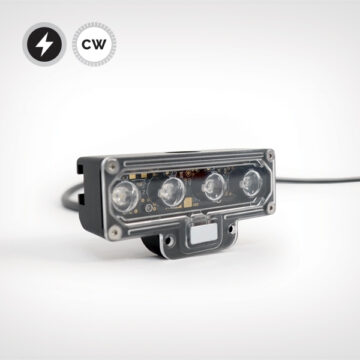
Modular M-TBAR
- Tiny bar light
- Angle Changers flexibility
- 64mm long