


With the rapid acceleration of the Electric Vehicle (EV) industry, the production of lithium-ion batteries (LIBs) is growing rapidly. Maintaining high quality is critical for safety, performance, and reliability. Machine vision inspection plays a key role at every stage of battery production, from cell component manufacturing to final assembly of the battery system. Effective illumination is essential for supporting cameras in detecting subtle defects, reading codes, and improving inspection accuracy even under challenging conditions like reflective surfaces and fast production lines.

The Role of Machine Vision Lighting
In machine vision systems, lighting is just as important as the cameras themselves. Without proper illumination, even the most advanced cameras may fail to detect critical defects and inconsistencies. Machine vision lighting is designed to enhance contrast, reduce glare, and highlight important features on battery components so that automated systems can capture accurate, repeatable images at high speeds. By tailoring lighting techniques to each inspection task, manufacturers can carry out reliable defect detection and improve production quality throughout the entire manufacturing process.
Battery Film Inspection
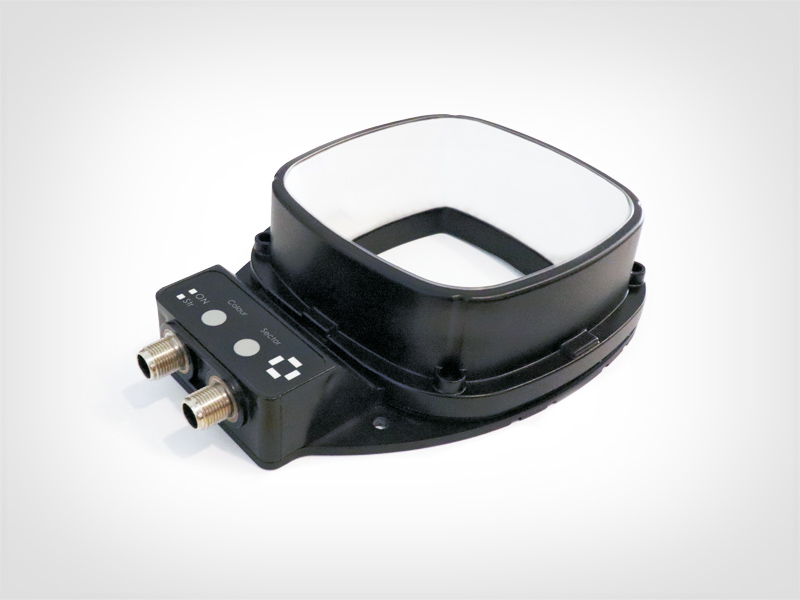
Thin battery films and coatings, such as separator materials or laminated layers, often present low contrast and challenging optical behaviour, especially when surfaces are smooth, glossy, or semi-transparent. Coaxial illumination provides on-axis, uniform lighting that helps stabilise reflection and improve contrast on flat film surfaces. This makes it well suited for detecting print imperfections, local contrast variations, contamination, and subtle surface defects when the film is supported on a controlled backing. In combination with other techniques such as low-angle dark field or transmitted backlighting, coaxial lighting can help achieve reliable, high-speed inspection of film quality in battery production.
Electrode/Cell Component Inspection
At the beginning stages of LIB production, low angle dark field illumination is commonly used to inspect electrodes, the key layers in each battery cell, and highlight surface defects like coating imperfections, scratches, and contaminants that would normally be invisible under standard lighting. This technique allows cameras to spot tiny scratches or coating inconsistencies on electrodes during roll-to-roll coating inspection, helping manufacturers ensure higher quality and reduce scrap before the cells are assembled.
Barcode and Code Reading
For accurate traceability of barcodes and codes on battery components, diffuse backlighting is used to ensure uniform illumination. By minimising glare and shadows on battery tabs, casings, and other reflective surfaces, this lighting technique supports high-speed vision systems in capturing reliable data so that each cell and module can be tracked throughout the manufacturing process.
Battery Cell Inspection
Before battery modules are assembled, individual cells must be carefully inspected for surface defects and alignment issues. Structured or directional illumination can emphasise subtle surface shape changes on pouch or cylindrical cells, making bulges, dents, and other irregularities easier to detect. Identifying these issues early ensures that only compliant cells proceed to module assembly, supporting safer and more reliable battery packs.
Module and Pack Assembly Verification
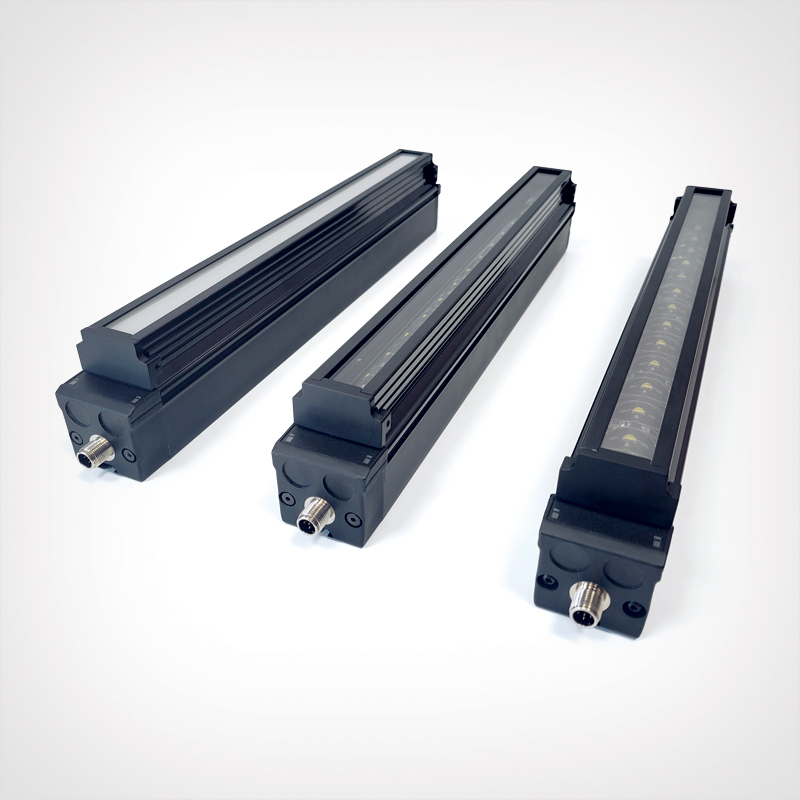
In the final stages of battery production, entire modules must be assembled correctly, with accurate placement and secure connections. High-intensity line lights are ideal for scanning a high volume of batteries quickly, providing consistent illumination across the surface. This technique helps vision systems detect misalignments, missing components, or incorrect fastening, to maintain high-quality standards in high-volume production lines.
Scrap Reduction
Even with careful assembly, defects at earlier stages or subtle errors during production can lead to scrap, making detection and prevention critical. Contamination and moisture are common risks which can cause short circuits, corrosion, or thermal runaway, which not only create safety risks but also cause the cells to fail.
During ramp-up, when new lines are still being optimized, scrap rates can be higher. Machine vision systems help minimise waste by detecting particle contamination, coating issues, or surface moisture early, allowing timely intervention and supporting consistent quality even in the early stages in production.
By applying tailored lighting techniques across all production stages, manufacturers can enhance defect detection, streamline automated processes, and maintain consistent quality throughout the LIB battery production chain. In this way, illumination is not just a support tool, it is a key driver of high performance batteries.
TPL Vision’s diverse range of machine vision lights provides tailored solutions for every stage of EV battery production, helping manufacturers to achieve precise inspections, boost production reliability, and maintain the highest quality standards.
Related products
-

MR-Dark Field (DKF)
- Dark field light
- OverDrive, sectors, bicolour
- 80mm and 130mm IntØ
-
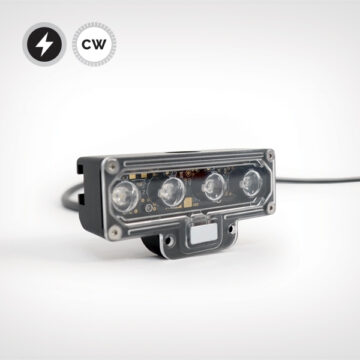
Modular M-TBAR
- Tiny bar light
- Angle Changers flexibility
- 64mm long
-
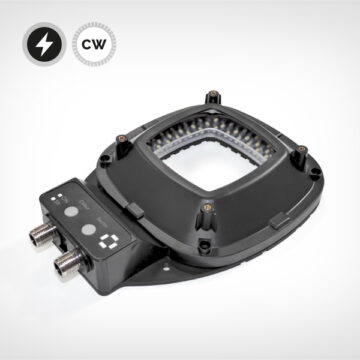
MR-Low Angle
- Powerful 45° low angle light
- OverDrive, sectors, bicolour
- 80mm and 130mm IntØ
-
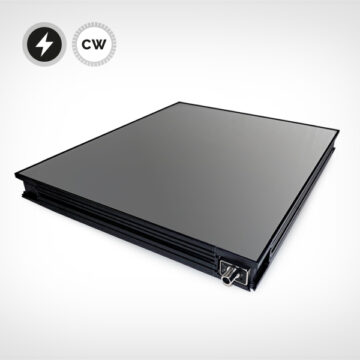
Collimated Medium CMBACK+
- Large area semi-collimated backlight
- OverDrive option available
- Sizes from 0.04m² to 0.16m²
-
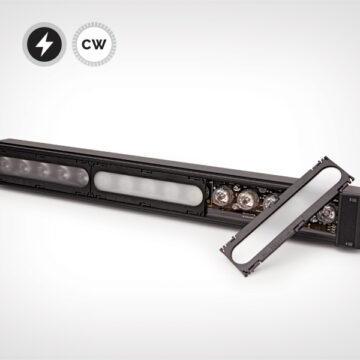
Modular M-EBAR
- Modular bar light
- Angle Changers flexibility
- Sizes up to 500mm
-
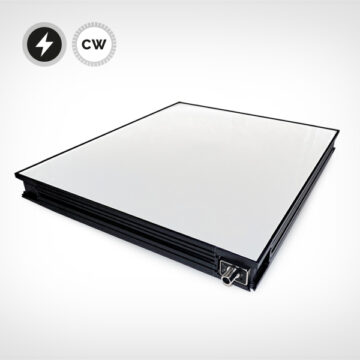
Medium MBACK+ OverDrive
- OverDrive strobe backlight
- Dimming via potentiometer
- Sizes from 0.04m² to 0.81m²